

Community that Transends and Transforms
I still remember where I was when my understanding of Jesus-centered Kingdom community took a seismic shift. I was in a seminary classroom at Bethel Seminary in St. Paul, MN. The class was Hermeneutics - and I was listening along with 10 or so other seminary students as the professor opened the proverbial door to what would be the next deeper level of my journey.
We don’t often pay much attention to the disciples as individuals - people with lives, families, their own pain, their own successes and failures. We talk more often about the disciples as a unit. They were the collective crowd that followed Jesus around and struggled to get things “right” along the way. But they followed. They tried their best. Many of them were fishermen and came from fishing families, but not all of them.
In fact, one of the disciples was deliberately named in the Gospels as “Simon the zealot.” The term “zealot” as a descriptor tells us a lot about Simon’s background and beliefs. The zealots, in the 1st Century, were a sect of revolutionary Jewish rebels who were violently opposed to the oppressive rule of the Roman Empire. They were Jewish nationalists who attempted to meet Roman rule with violent insurrection. Inevitably, it would be this kind of radicalism, instigated by the zealots, that would fuel what would become the First Jewish-Roman War from 66 to 70 AD.
In the same rag-tag collection of Jesus’ closest disciples, there is another who is described as a “tax collector.” The Gospels of Luke and Mark name this disciple, “Levi.” The Gospel of Matthew names the disciple, “Matthew” - arguably a self-identification of the author, who chose to focus on the name given to him by Jesus, marking his transformation.
A tax collector and a zealot in the same group of 12 should have been a recipe for disastrous dynamics. As a tax collector, Matthew’s role within society was in service to the Roman Empire. Tax collectors were often fellow Jews who collected Roman taxes on behalf of the Roman occupation. Tax collectors were despised by Jewish society as traitors and betrayers of Jewish interests. In Mark 2:15, Jesus is challenged for sharing a meal in his home… Tax collectors were exactly the kind of role that would have drawn the hostile attention of radical nationalists like the zealots.
Matthew and Simon would have been sworn enemies. Prior to joining the band of Jesus’ disciples, Simon would have had a hard time spending 5 minutes in the same room with Matthew without taking potentially lethal action against him. Matthew represented everything Simon was devoted to oppose. Matthew likely would have had good reason to fear for his life around Simon.
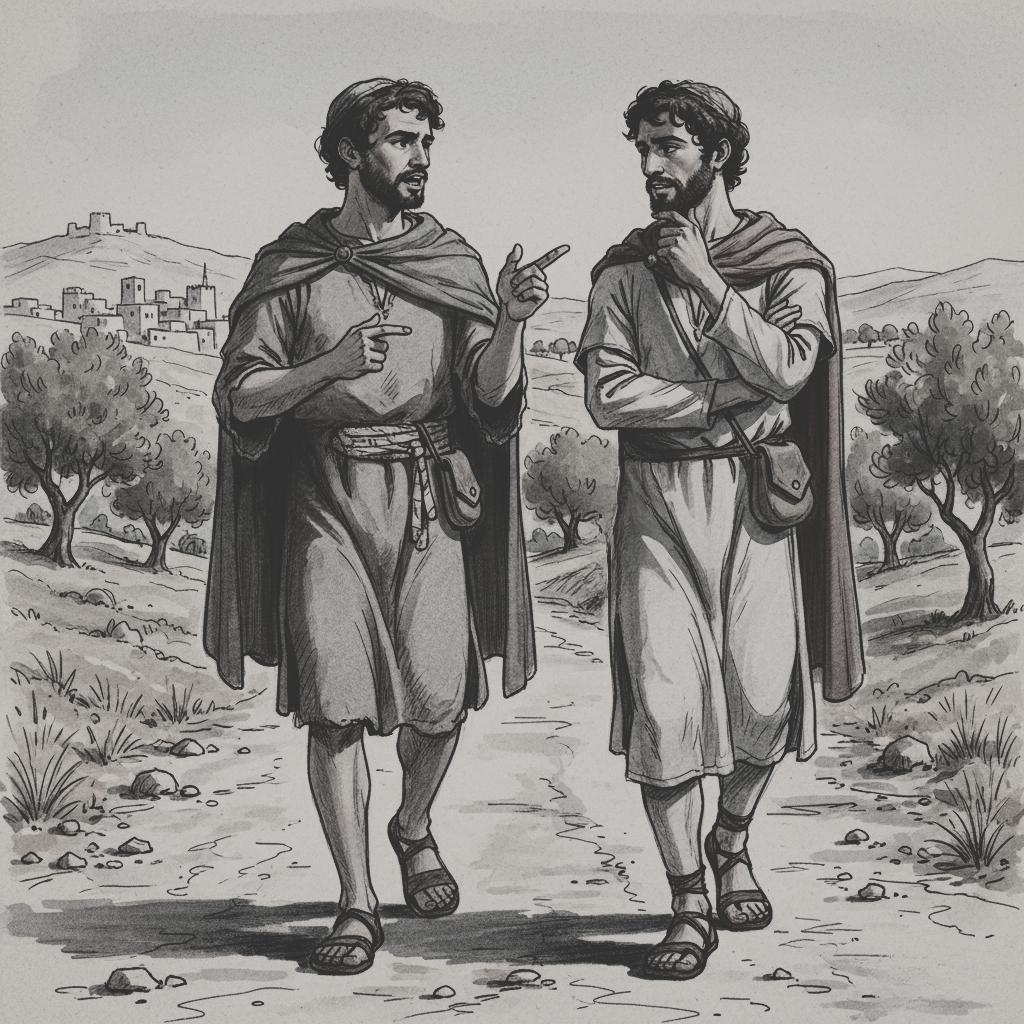
New Community Around New Allegiance
But, as disciples following Jesus, something shifted in the allegiances of these two men. In order for the community of the 12 to exist as they followed Jesus and continue on, carrying Jesus’ Gospel to the world after Jesus’ resurrection, something had to happen that allowed these two men to transcend the societal barriers between them. When Jesus calls us to “repent, for the Kingdom of Heaven is at hand,” (Mat. 4:17), He is making an invitation:
The King of Israel is calling your allegiance to His Kingdom. Turn from the ways of your old allegiances and join this new reality.
Kingdom allegiance transcends allegiance to nation, allegiance to cause, allegiance to empire, allegiance to culture. Kingdom community transforms us as it transforms the world, one mustard seed movement at a time. Jesus’ choice for the 12 who would follow him as His closest disciples seems to demonstrate a continuation of His command to “love your enemies” - as if to say, “love your enemies and live in community with them.”
In Jesus’ community, Matthew belonged to Simon and Simon belonged to Matthew.
I wonder if this challenges your assumptions of belonging in community?
What opposing allegiances separate us from one another today?
